


We start with assessment
A BCBA observes your child and your routines, understanding what's hard, what you've already tried, and what matters most to your family.

ABA parent training for parents in NC, GA, MD
Your child is unstoppable. And therapy should be, too. With our expert ABA parent training, we give you the guidance, tools and support you need to navigate the world of autism. All day, every day.
ABA parent training is coaching delivered by a Board Certified Behavior Analyst or experienced RBT. Instead of a therapist working with your child directly, we teach you the strategies, coach you through real situations, and help you become your child's primary behavior change agent. You learn to recognize what's driving behavior, how to respond effectively, and how to build skills throughout your child's actual day. Training happens in your home, during your real routines, with your real challenges.
How parent training actually works
A BCBA observes your child and your routines, understanding what's hard, what you've already tried, and what matters most to your family.
You're the one implementing strategies, and we coach you through real moments: breakfast, getting dressed, homework, bedtime. You see what works immediately.
We don't practice in isolation but work during the actual times your child struggles, so you learn in context.
Not vague advice, but clear, step-by-step plans you can follow every day with visual supports, data sheets, and strategies tailored to your child.
We track progress weekly, and if a strategy isn't working after a reasonable time, we change it. You're never stuck doing something that doesn't fit.
By the end, you understand how to recognize behavior patterns, what to try, and how to adjust on your own, so you're building skills, not just following scripts.
Why parent training works better for some families
A therapist comes three times a week, but you're with your child 168 hours a week. If skills only develop during therapy, they won't generalize, but when parents understand ABA, everything changes. Breakfast becomes a teaching moment, bedtime becomes practice, and every transition is an opportunity. Parent training teaches you to see behavior differently and respond strategically instead of reactively, so your child learns from the people they trust most, in the environments that matter most.

Insurance coverage for parent training
Most families in North Carolina, Georgia, and Maryland can access parent training through insurance, and Medicaid often covers it with no out-of-pocket cost. We verify your benefits upfront and handle all the billing.
North Carolina
Maryland
A session with James's parents: Real change in action
James refuses homework, every afternoon becomes a battle, his mom tries reasoning, his dad uses consequences, nothing works, and homework takes three hours with both parents exhausted and frustrated.

Our BCBA observes James and homework time, watching what happens right before refusal and whether James understands the assignment or if it's too hard or too easy or if he needs a break. They talk to his parents about what's been tried and see the pattern: James gets overwhelmed, says "I can't," shuts down, his parents escalate, and a three-hour battle ensues.
During the next homework session, the BCBA coaches James's parents in real-time: "Before you start, give James a choice of where to work (table or desk) so he feels more control," and James picks the desk. "Break the assignment into smaller chunks and do one problem, then a break," and his mom tries it and James completes one. "When he says 'I can't,' that's anxiety talking. Don't debate it. Say 'Let's try one' and guide him," and his dad does and James tries. The session that usually takes 90 minutes with fighting now takes 30 minutes with cooperation.
James's parents know what to do now, they set up the environment, break work into chunks, and when James gets frustrated, they respond calmly and strategically so homework time improves. But his mom realizes James also refuses to brush his teeth, she uses the same strategies, and it works there too.
James's parents aren't just better at homework but understand behavior, recognize patterns, and adjust strategies across situations so bedtime improves, transitions improve, and they're solving problems on their own.
The Point:
This is transformation, not of the child alone but of the whole family's approach, and parents become the therapists.
The shifts parents report
Parent stress
Child cooperation
Skill generalization
Parent knowledge
Family dynamics
Independence
This is what happens when parents become the behavior change agents.
I want this!Is parent training right for your family?
Parent training is evidence-based and works especially well for families who want to be empowered, understand why your child behaves the way they do rather than just have someone manage behavior for you;
have limited access and live far from clinics or can't commit to multiple weekly therapy sessions where parent training can happen less frequently but with bigger impact;
prefer to lead and be the primary agent of change rather than outsource your child's learning to a therapist;
have multiple needs where your child struggles across situations (home, school, community) and parent training helps you address all of them consistently;
have consistent caregivers where parent training works best when the same adults are home regularly, whether that's one parent, two parents, or a grandparent who's the primary caregiver;
or want long-term skills and are looking to build your own understanding and problem-solving ability, not just get through this year.
Important: Parent training works best alongside school support or other services, and it's also effective as a follow-up when your child has made progress and you want to maintain gains independently.
The actual cost breakdown
Covers parent training as medically necessary ABA with usually no annual dollar cap, typical authorization of 5–10 hours per month, and your out-of-pocket is usually $0.
Covers parent training with an autism diagnosis, often includes annual limits, typical coverage is included in your $30,000–$50,000 ABA benefit, and your out-of-pocket copay per session is typically $20–$50.
$100–$150 per hour for parent training sessions, though many families find it costs less than in-home or clinic therapy since it's less frequent.
We verify your coverage, help you understand how parent training hours count toward your ABA authorization, and are transparent about costs upfront.

What parents actually learn
You'll learn to recognize what's driving your child's behavior, understand how to set up your home environment to prevent problems, learn specific responses to common challenges (refusals, meltdowns, transitions, aggression), practice data collection so you know what's working, and build problem-solving skills so you can adjust strategies independently.
Specific areas:
All taught in context, during your real routines, with your real challenges.

We coach you, not direct you
With in-home therapy, a therapist works with your child directly and you observe, but with parent training, you're the one implementing and we coach you through real moments with live feedback, real-time adjustments, and problem-solving together. It's a partnership: your expertise on your child plus our expertise on behavior means together you figure out what works.
What we won't say (and why it matters)
"You're doing it wrong."
You're learning, and we show you what to adjust and why with feedback that's constructive, not critical.
"Just be stricter."
Stricter doesn't work, and understanding and consistency work, so we teach strategy, not severity.
"Your child should know better by now."
Development is uneven, skills don't always generalize, and we help you meet your child where they actually are.
"You need to do exactly what I say."
You know your family best, we offer strategies, you adapt them to fit your life, and flexibility matters.
"This will work immediately."
Change takes time, some skills build in weeks and some take months, and we celebrate small progress and adjust when needed.
"You should be able to handle this alone."
Parenting a child with significant challenges is hard, and asking for coaching isn't failure but wisdom.
From first call to family transformation
Contact us about parent training, and we talk about your child's biggest challenges and your family's goals.

A Board Certified Behavior Analyst meets with your family, observes routines that are hardest, asks what you've already tried, and understands your child and your dynamics.
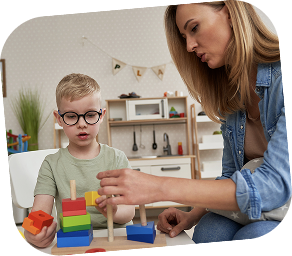
Based on the assessment, we identify which skills to teach first, set realistic goals, and explain what parent training will look like for your family.

We verify coverage, handle authorizations, and find a schedule that fits your life.

Your BCBA or experienced RBT starts sessions, you learn strategies and practice in real moments, we observe and coach and adjust, and you gain confidence and competence.

Serving families across three states
Apex ABA provides parent training throughout North Carolina, Georgia, and Maryland, and sessions happen in your home, your community, wherever makes sense for your family.
and surrounding areas
Why families choose parent training with us
We didn't blame us for our child's behavior but worked with us to figure out what works for our family.
We're not just reacting anymore, we can see the patterns, we know what to do, and we feel in control.
Not just our child, we're less stressed, our marriage is better, and our other kids see us handling things calmly.
Having a BCBA explain our child's behavior made us feel less crazy, and knowing other families struggle like us helped.
What the research says
Parent-implemented ABA shows strong outcomes, especially for young children
Research shows parent-led intervention with BCBA coaching accelerates progress and improves maintenance of skills
Certifies coaches who provide parent training
Skills taught by parents across natural environments generalize faster than clinic-based therapy
Common questions answered
It depends on your child and your goals because some kids do great with parent training alone while others benefit from parent training plus some direct therapy, and we help you figure out what fits.
Typically 1–2 times per month, though this varies, and parent training is less frequent than direct therapy but more focused with some families doing weekly sessions early on, then tapering to monthly check-ins.
Patience is a skill, not a personality trait, and we teach you strategies that make interaction easier, which naturally reduces frustration.
Ideally, yes, because when both caregivers use the same strategies, progress is faster, but if only one parent is available, we work with that and consistency matters more than having everyone there.
Sometimes behavior gets worse before it gets better (a phenomenon called an "extinction burst"), and this is actually a sign the strategy is working so we coach you through it.
Yes, some families combine both where you learn strategies and a therapist also works with your child, and this often speeds progress.
We track data together and you'll see changes in daily routines: fewer battles, faster transitions, better cooperation, and we measure progress objectively so you know what's improving.
Parent training teaches you general principles that apply across your children, you learn to recognize patterns and adjust strategies, and many parents find they're better at handling behavior in general.
Ready to become the expert?
Parent training is for families ready to take the lead, understand behavior, solve problems, and build skills that last because they're rooted in your family, your values, and your routines. Let's make you the behavior expert your child needs.
Copyright © 2026 Apex ABA Therapy. All Rights Reserved.