
How to Teach an Autistic Child to Share (Step-by-Step)
Teach an autistic child how to share with clear ABA steps, practical examples, and strategies families can use at home and school.
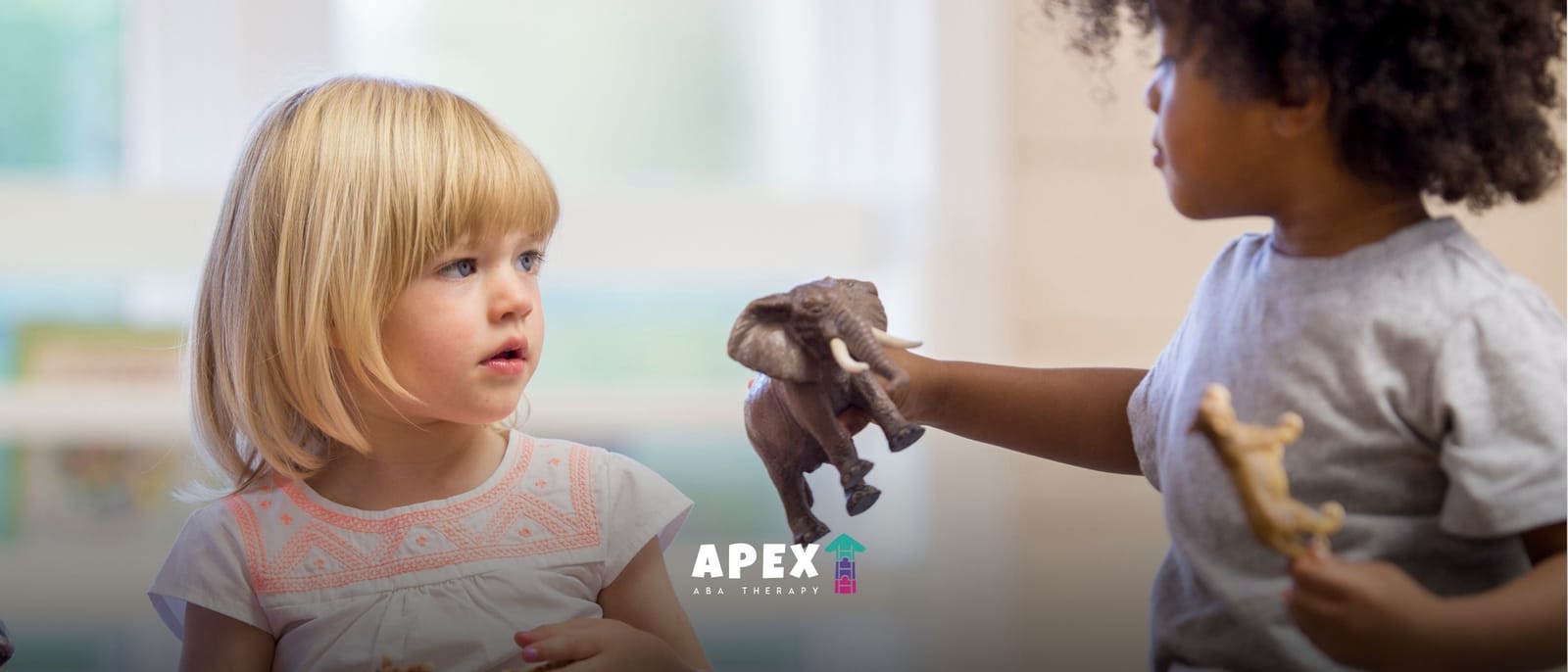
Teaching sharing to children with autism involves breaking sharing into small steps, using structured practice, reinforcement, modeling, and visual supports. Sharing is not a single skill but a set of behaviors — like waiting, turn-taking, and giving — that can be systematically taught using ABA techniques.
Why Sharing Can Be Hard for Some Autistic Children
Sharing requires joint attention, communication, flexibility, and waiting — all of which can be challenging due to differences in social awareness and executive functioning. Children with autism may struggle to understand social norms around sharing or waiting for a turn.
Research links social skills training to improvements in social interaction and reciprocal behaviors, including skills related to sharing.
Step-by-Step: How to Teach Sharing Using ABA
1. Break Sharing Into Small, Teachable Parts
Start by teaching simple components:
- Turn-taking first (one child uses a toy while the other waits).
- Return the toy when asked.
- Switch roles.
Breaking sharing into small steps makes it easier to teach successively.
2. Use Visual Supports and Social Stories
Visual cues like “My turn”“Your turn” cards and social stories explain expectations and sequence of sharing behavior. Visual supports make abstract social rules concrete and predictable.
3. Model Sharing Behavior
Adults and peers model sharing — taking turns with toys or snacks — while narrating what’s happening. Modeling gives a clear example of expected behavior.
4. Reinforce Sharing Attempts
Use positive reinforcement when a child waits, gives, or takes turns. Rewards may include praise, tokens, or preferred activities right after sharing behavior occurs, which increases the chance the behavior will happen again.
5. Practice in Natural Settings
Share routines at home, playgroup, or school with structured games that involve taking turns. Games like ball rolling, board games, and cooperative activities give repeated sharing practice in social contexts.
Break Sharing Into Small Parts
Visual Supports & Social Stories
Model Sharing Behavior
Reinforce Sharing Attempts
Practice in Natural Settings
ABA Principle in action: Each step builds on the previous one — shaping, prompting, and reinforcing small successes lead to independent sharing skills.
Need personalized support?
Our board-certified behavior analysts design individualized sharing programs that fit your child’s unique learning style. We’re here to help every step of the way.
© 2026 Apex ABA Therapy — Evidence-based strategies for meaningful progress.
Real-World Practice
Families and clinicians report that structured sharing practice — such as using a timer to signal turns or turn-taking boards — helps children expect what comes next and reduces resistance. Early and repeated practice also supports generalization to real situations like playgrounds or classroom centers.
Research shows social skills training interventions significantly improves social participation and reciprocity in children with autism, supporting the value of structured teaching for skills underlying sharing.
Conclusion & Next Step
Knowing how to teach an autistic child to share? means using structured ABA steps: breaking the skill down, applying visual supports, modeling, reinforcing attempts, and practicing in natural routines. These techniques help children learn shared interaction in real life.
To create customized sharing and social-skills teaching plans tailored to your child’s goals, schedule a consultation with Apex ABA. Our team applies evidence-based ABA strategies in natural environments to support meaningful social skill development.
Sources:
- https://raisingchildren.net.au/autism/school-play-work/play-learning/playing-with-others-autistic-children
- https://www.autismspeaks.org/tool-kit-excerpt/autism-and-social-skills-development
- https://www.autismparentingmagazine.com/how-to-help-autistic-child-with-social-skills/?srsltid=AfmBOorRiabKXYFEOewTNzza-NUXnne3B4bga0vsh55RhGU1YftgtWMQ
- https://www.stanfordchildrens.org/en/topic/default?id=interacting-with-a-child-who-has-autism-spectrum-disorder-160-46
- https://affectautism.com/2024/03/01/sharing/
Get started today
Ready to talk about ABA therapy?
Apex ABA Therapy helps families in North Carolina, Maryland, and Georgia access in-home, school-based, and daycare ABA services.